

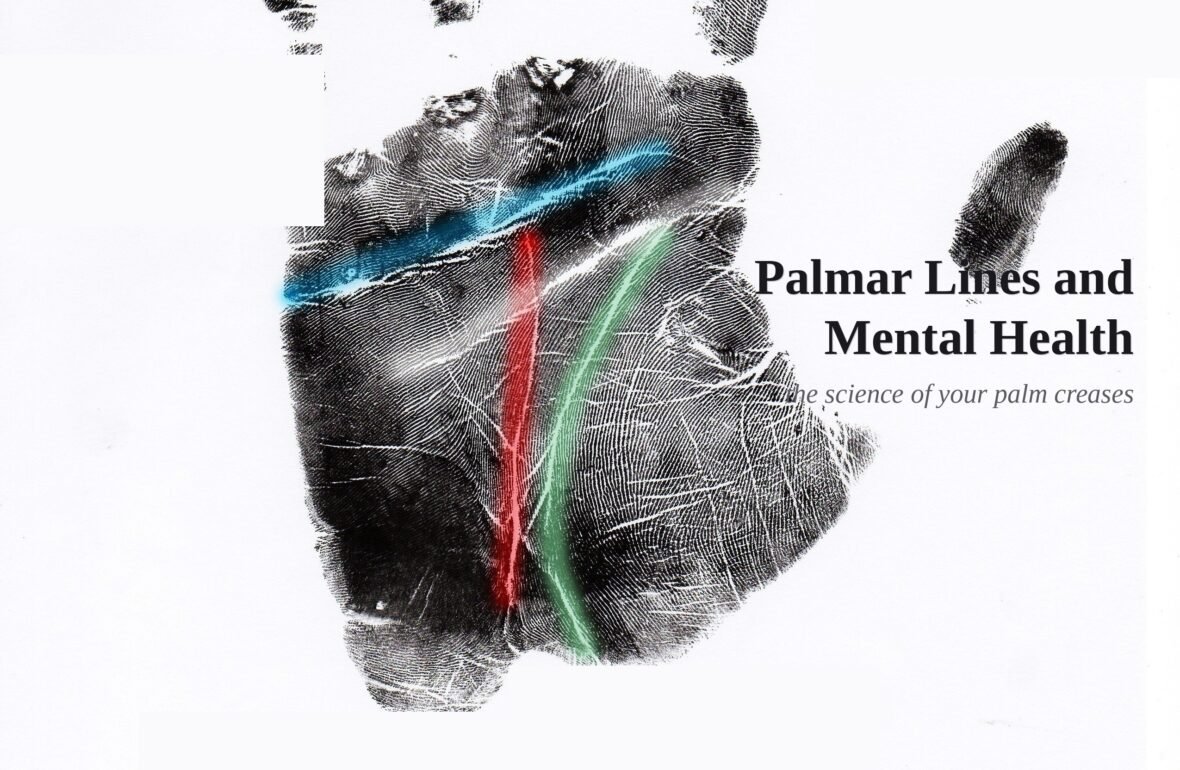
What Are Palmar Lines?
Palmar lines (or creases) are the flexion lines that form across the palm — the deep folds you see when you close your hand into a fist. They begin forming in the womb between weeks 7 and 9 of gestation, before finger movement even begins, during the same early developmental window in which the brain’s basic structure is being laid down. This shared embryonic timing is the theoretical basis for why palm lines have been studied as a window into neurodevelopment: a hand and a brain developing under the same prenatal conditions, at the same time, may carry parallel signatures of how that development went. The term “crease” can be a little misleading — these lines aren’t formed by movement or folding at all. They’re an expression of the nervous system, set before the hand has even begun to move.
Within the scientific literature on hands, palmar crease research has produced the most consistent evidence of a relationship with mental illness and psychiatric disorders. When I reviewed the science, there were 11 relevant studies on palmar lines, featuring over 3,600 participants; and every paper reported findings in the same direction. The Simian line, the Sydney line, and the density of secondary creases have each been linked to specific conditions, most strongly schizophrenia and intellectual disabilities. These are population-level statistical correlations, not individual diagnostic signs — more on why that distinction matters at the end of this section.
The three lines that have been researched in particular are: the Simian line, the Sydney line, and the density of secondary (minor) creases across the palm.
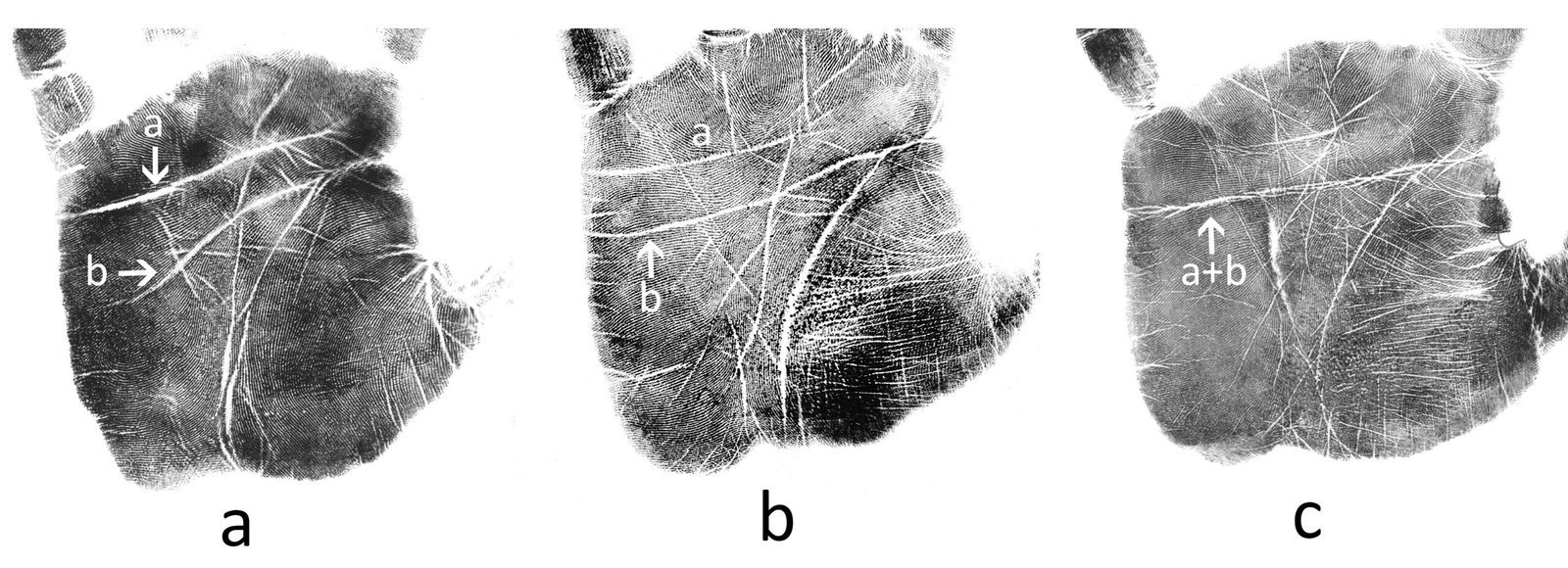
(a) shows normal palmar crease formation, in which the distal and proximal (Heart and Head) transverse creases do not meet. (b) shows a Sydney line in which the proximal transverse crease extends across the palm. (c) shows a Simian line where the distal and proximal transverse creases combine to form a single crease.
The Simian Line: The Most-Studied Palmar Marker
The Simian line occurs when the two horizontal lines that normally cross the palm — the heart line and the head line — fuse into a single transverse crease. It’s the most extensively researched palmar marker in the clinical literature, and for good reason: it’s already an established biomarker in medical genetics, associated with over 40 chromosomal conditions including Down syndrome, KBG syndrome and Wolf-Hirschhorn syndrome.
Its prevalence varies notably by ethnicity, and it appears roughly twice as often in males as females.
In relation to mental illness and developmental conditions specifically, the research is consistent:
- Neurodevelopmental disorders: Johnson and Opitz’s clinic studies found the Simian line in 11.2% of children with developmental disorders compared to just 2% of controls, with affected children significantly more likely to have lower intellectual ability and additional physical anomalies such as cleft palate or cardiac murmur.
- Intellectual disabilities: Shiono and Azumi’s Japanese case-control study of over 800 participants found aberrant Simian line formations significantly elevated in both male and female cases. Dar and Jaffe’s Israeli study of 750 participants found the Simian line present in 7.5% of intellectual disability cases versus just 0.2% of controls.
- Autism spectrum disorder: A Nova Scotia study found significantly higher rates of Simian lines among children with developmental disorders, while a separate comparative study of ASD adults found highly significant differences in palmar crease abnormalities versus controls — though only 14% of ASD participants showed the marker, underlining that it is far from universal even where the association holds.
- Depression: A Nigerian cross-sectional study found women with a Simian line scored significantly higher on depression measures than women without one — though no such association appeared in men, and the sample was small.
The Sydney Line
The Sydney line is a related but distinct marker: a transverse crease that extends the full width of the palm, without the specific fusion pattern that defines a true Simian line. Johnson and Opitz’s developmental clinic research found the Sydney line, alongside the Simian line, elevated among children with developmental disorders — of the 256 children studied, 25% showed one of these two unusual crease patterns, and those children were more than twice as likely to have an IQ below 70 compared with children with typical palmar creases.
Secondary Crease Density and Schizophrenia
Beyond the two major named creases, researchers have also examined the density of minor “secondary” creases — the finer lines that can cover the palm like a net. Cannon and colleagues found that schizophrenia patients with a notably high density of secondary creases had significantly more psychiatric hospital admissions and an earlier age of illness onset than other patients, suggesting the marker may track not just presence of illness but its severity or trajectory.
This is theorised to connect to the autonomic nervous system: dysfunction in ANS regulation is already well established in schizophrenia, and palmar crease formation is itself influenced by autonomic activity during development — offering a plausible physiological mechanism rather than a coincidental statistical association.
When Biomarkers Are Combined: The Strongest Results
The most compelling findings in the entire review came not from any single crease examined alone, but from studies combining multiple hand-based markers together. Shamir and colleagues combined palmar crease patterns with knuckle formation, nail fold shape and finger flexibility, achieving 80.4% accuracy in correctly identifying schizophrenia patients and 77.1% accuracy in correctly identifying non-schizophrenic controls. A follow-up study by Domany and colleagues replicated this with the same combined-marker approach, reaching 78.6% and 80.2% accuracy respectively — both studies landing close to the 80% sensitivity and specificity threshold generally considered clinically meaningful.
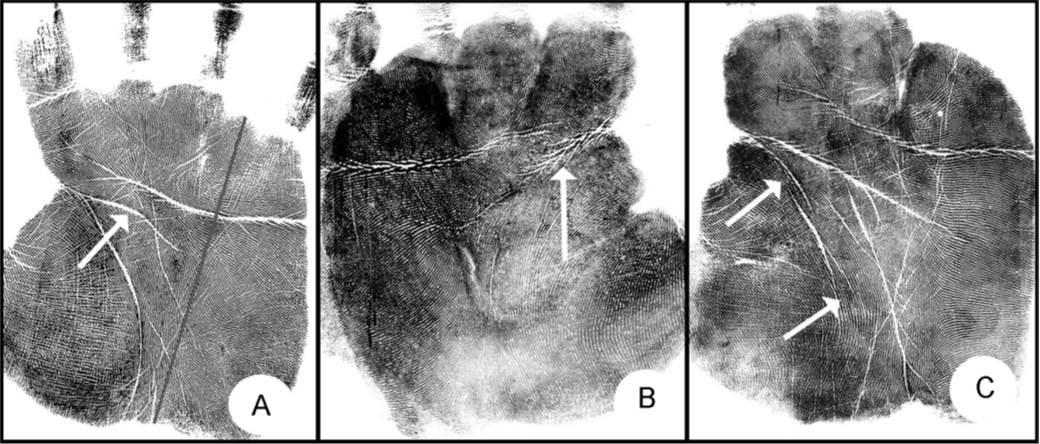
Shamir et al. (2015): palmar crease abnormalities in schizophrenia. (A) short proximal transverse crease. (B) fragmented and short proximal transverse crease. (C) fragmented and poorly formed thenar crease.
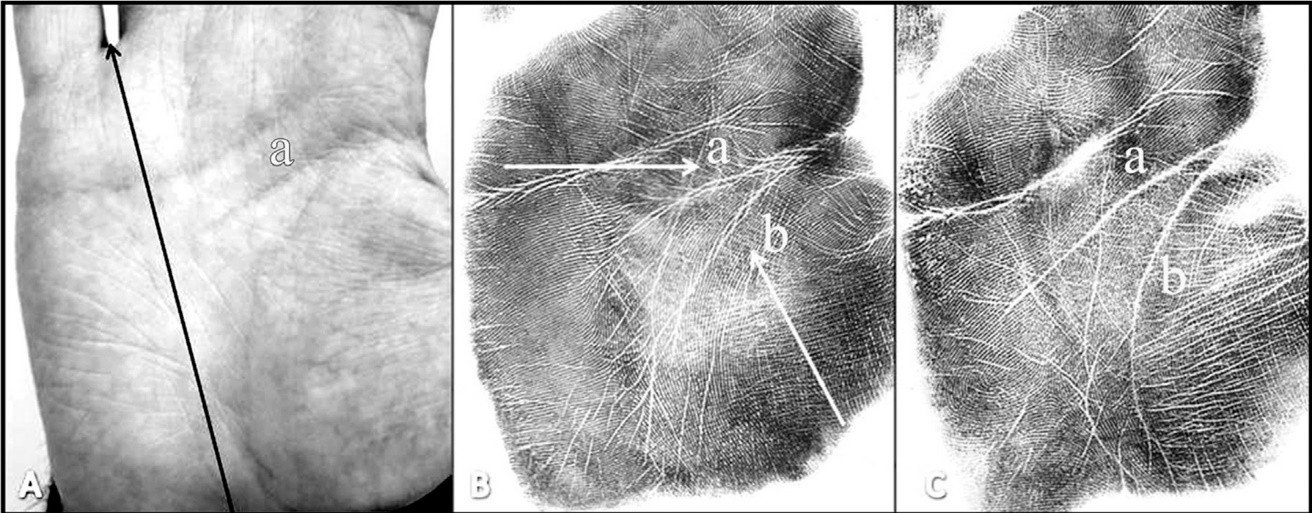
Domany et al. (2018): palmar crease abnormalities in schizophrenia. (A) short proximal transverse crease. (B) fragmentation of the proximal transverse crease (a) and fragmented thenar crease (b). (C) normal proximal transverse (a) and thenar crease (b).
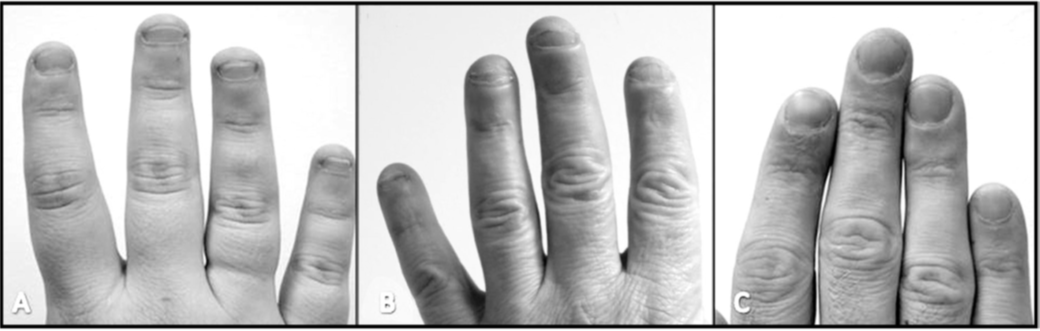
Domany et al. (2018): nail and interphalangeal joint biomarkers in schizophrenia. (A, B) extension of the eponychium and poorly defined proximal interphalangeal joints. (C) normal eponychium and joint definition.
A separate study by Huang and colleagues, examining minor physical anomalies more broadly, achieved an 84.5% successful classification rate between schizophrenia patients and controls, with the Simian line ranking as the single strongest individual predictor in their model.
Summary Table: Palmar Crease Findings by Condition
| Condition | Marker | Key Finding |
|---|---|---|
| Schizophrenia | Combined markers (crease, knuckle, nail, flexibility) | 78–84% classification accuracy across three independent studies |
| Schizophrenia | Secondary crease density | Linked to more hospital admissions and earlier onset |
| Intellectual disabilities | Simian line, Sydney line | Consistently elevated across every study reviewed |
| Neurodevelopmental disorders | Simian line, Sydney line | 25% of affected children showed one of these two markers |
| Autism spectrum disorder | Simian line | Elevated, though present in only ~14% of cases — not a majority marker |
| Depression | Simian line | Association found in women only; small sample, preliminary |
| Psychosis (twin studies) | Abnormal palmar flexion creases | Higher rate in affected twins; suggests non-genetic developmental factors |
An Important Caveat, in My Own Words
It would be easy to read findings like these and start “diagnosing” from a single crease on a single hand. That would be a misreading of what this research actually shows, and it’s a distinction I’ve thought about carefully since completing this review — including in my later doctoral work.
These are population-level statistical correlations drawn from group comparisons, not individual diagnostic signs. A palmar crease pattern found more often in a group of people with a condition is not the same as a marker that reliably predicts the condition in any one individual — mental illness is multifactorial, and no single biomarker, examined in isolation, captures that complexity. The language matters too: describing a hand feature as something that “indicates a vulnerability” sits very differently to claiming it “predicts” or “reveals” a fixed trait. I hold to the former, not the latter, and treat any hand feature as one part of a much larger picture rather than a determinant of anything on its own.
What the Clinical Research Doesn’t Capture
It’s also worth being clear about what this body of research is actually measuring. These studies classify palmar creases in crude, binary terms — a Simian line is either present or absent, a crease is either “abnormal” or it isn’t. That’s appropriate for a psychiatric research framework built around case-control comparisons and statistical significance, but it’s a fairly blunt instrument next to how a hand analyst actually reads a line.
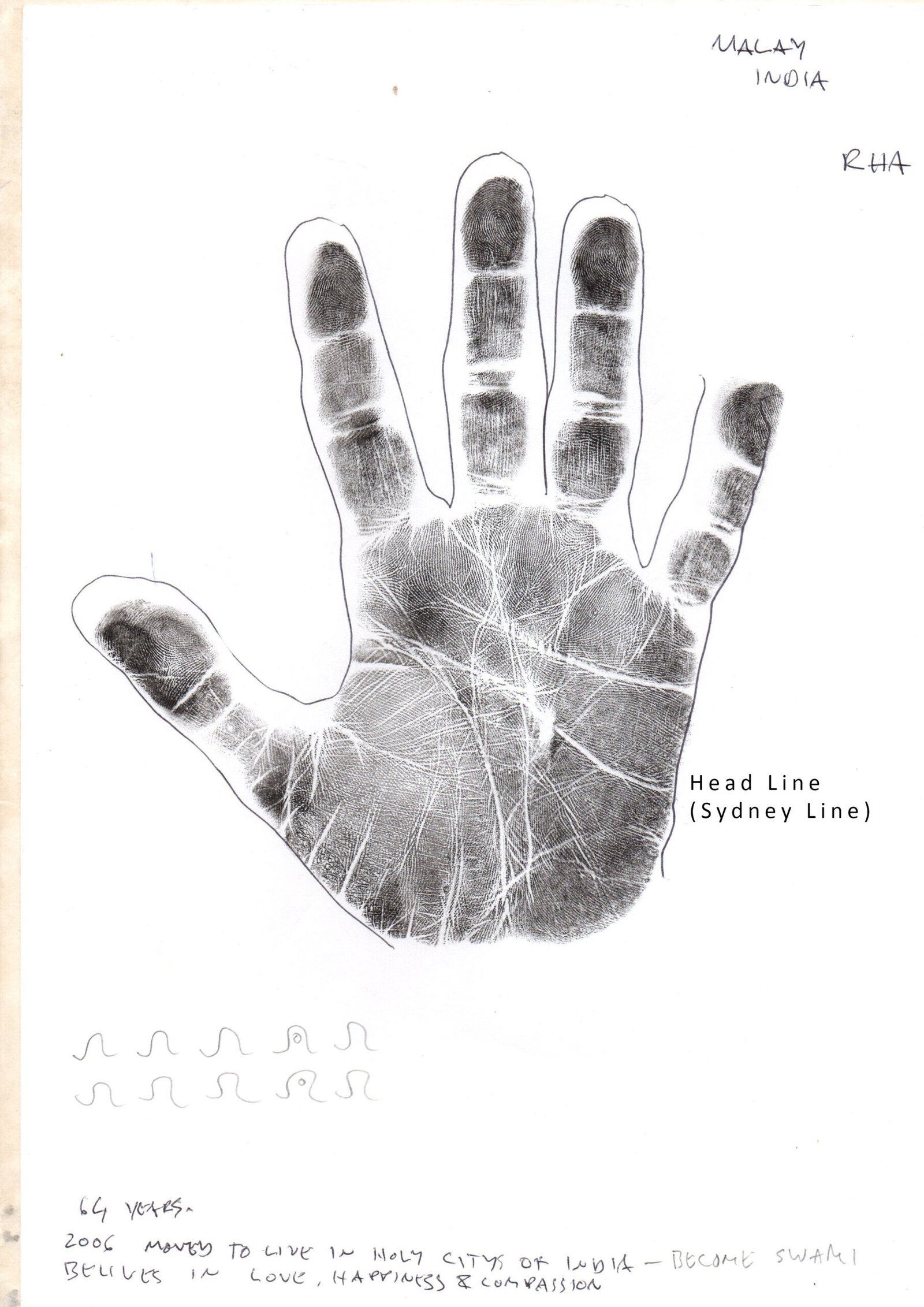
A Sydney Line in chirology, where the Head Line crosses the entire hand, shows someone with an intense analytical mind with constant thinking and planning.
In chirology, a crease is read for its depth, length, clarity, branching, breaks, and its relationship to every other feature in the hand — not simply logged as present or absent. The character and psychological qualities a hand analyst associates with a given line formation have never been the subject of this clinical research; it isn’t designed to ask those questions, and it hasn’t tried to. In a chirology reading, for instance, a Simian line points to an intensity and single-mindedness of focus that can be a real strength when it’s understood and channelled well. I explore this in much more depth in my dedicated article on the Simian line.
The same goes for the Sydney line — clinically flagged only as a marker of developmental disorder risk, but read in chirology as a sign of an intense, analytical mind, constantly thinking and planning.
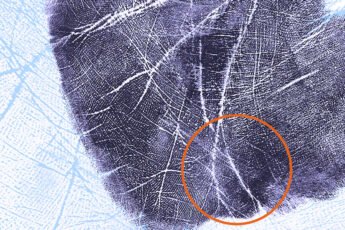
The same is true of a high density of secondary creases — a “Full Hand.” In the clinical literature it’s tracked purely as a severity marker; in chirology it points instead to a highly refined, sensitive and receptive nature. So while the psychiatric literature offers genuine evidence that these formations relate to neurodevelopment, it says nothing at all about the more detailed interpretive layer chirology works with — that’s simply outside its scope, not something it has examined and found wanting.
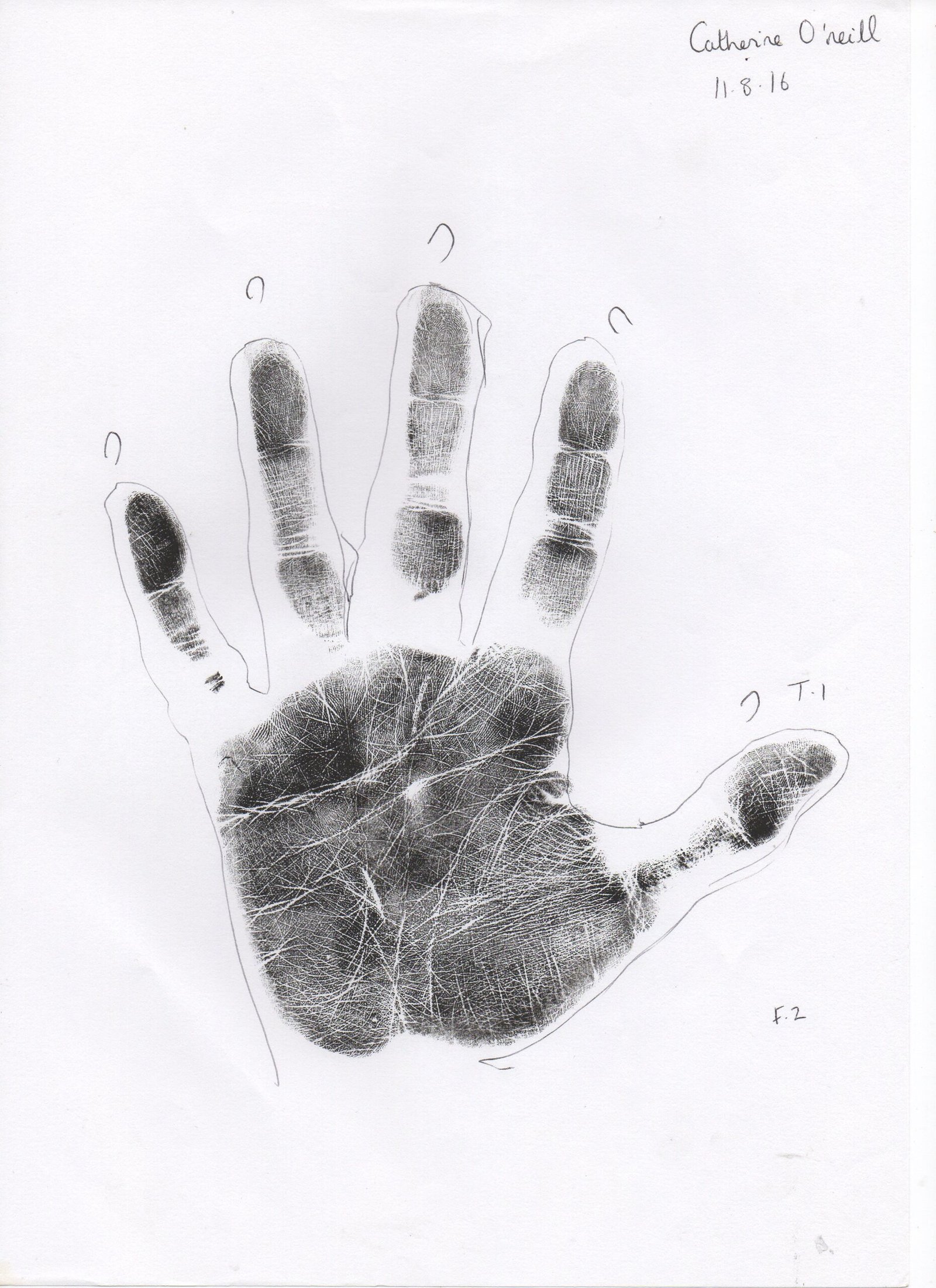
Fine and sensitive skin with many lines. In chirology this shows a highly refined, sensitive and receptive person.
Why This Research Matters for Modern Chirology
What this body of research does establish — reliably, and across multiple independent research groups — is that the hand is not a random or arbitrary object of study. Its physical development is genuinely entangled with the same prenatal processes that shape the nervous system. That’s a legitimate, published, peer-reviewed foundation for taking hand analysis seriously as more than folklore, even as it demands real intellectual honesty about what the evidence can and can’t support at an individual level.
Related Reading
- Simian Line Explained
- What Your Ring Finger Reveals: The Science of the 2D:4D Digit Ratio
- Science and Research: The Evidence Behind Chirology
This article draws on my published MSc systematic review, Rook (2022), European Journal of Psychiatry.










Leave a Comment