

About Lawrence
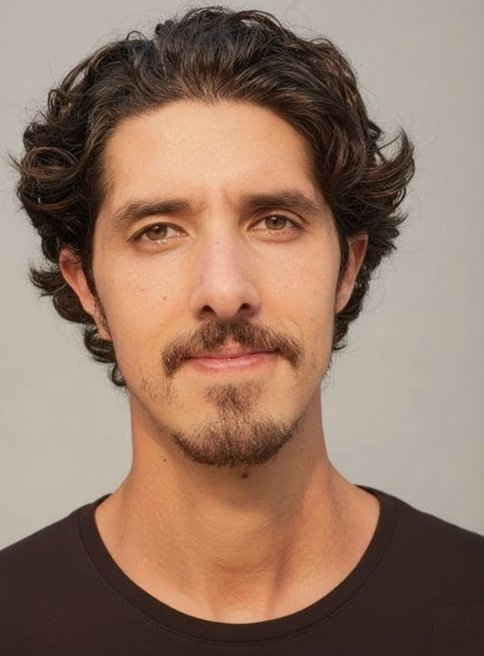
Lawrence Rook | Psychotherapist · Hand Analyst · Researcher
I’m Lawrence Rook, a psychotherapist and hand analyst. For over 15 years I’ve worked with people through the hands, the mind and, more and more, through meditative awareness. I’ve completed doctoral research in chirology and psychotherapy, and my MSc dissertation on the hand and mental health was awarded Dissertation of the Year and published in the European Journal of Psychiatry. Today I work online with individuals and couples around the world, and I bring hand analysis to private readings, corporate talks and premium events. Over time, my inquiry into the mind led me beyond psychology alone, towards the nature of awareness itself.
I first discovered hand analysis when I was around fifteen. What began as an unusual interest quickly became something much more significant. For the first time, I had a way of understanding myself that I hadn’t encountered anywhere else. As I began reading other people’s hands, I discovered an extraordinary tool for exploring psychology, personality and the relationship between mind and body. It also opened up questions that have stayed with me ever since: how much of who we are is reflected in our physical form? What can we really know about another person? And what does any of this tell us about the nature of human experience?
By my early twenties, I was reading hands professionally. Since then I’ve read thousands of hands, in private consultations and at events, festivals and corporate gatherings in the UK and around the world. Alongside this, I became increasingly drawn to Eastern philosophy, Taoism, martial arts, yoga and meditation. I studied Chinese medicine, too, exploring another tradition that understood the body and mind as intimately connected. Yet I kept returning to psychology. I wanted to understand people more deeply, not only through their physical characteristics, but through their inner worlds: their emotions, relationships, struggles and sense of themselves.
I was equally drawn to working with people directly, and went on to train in counselling and psychotherapy. Existential psychotherapy brought together my interests in psychology and philosophy, offering a way of exploring not only what people struggle with, but how they understand their lives, what gives them meaning, and what it means to exist.
Throughout this time, there was another thread running through my life. Alongside my professional pursuits, I was deeply interested in the spiritual dimension of human experience. I spent time travelling in India, practising meditation and yoga, visiting ashrams, studying Indian philosophy and seeking out teachers. I was drawn to the possibility that understanding ourselves psychologically, while valuable, might not answer every question about who we are. I wanted to understand the nature of the self itself, and whether the peace and contentment we seek are necessarily dependent on how our lives unfold.
Then my life was turned upside down, and the inquiry became much more immediate. After meeting my teacher, Christer Norman, I spent a year meditating with him, drawn inward the way the body is drawn towards sleep. What followed was a profound shift in my experience of myself and the world. The identities and assumptions through which I had understood myself began to lose their solidity, and the questions I had explored intellectually for years became matters of direct experience. My interest in non-duality grew from there, because it offered a philosophical language for something I was discovering for myself: that who we fundamentally are may be quite different from the person we ordinarily take ourselves to be. Since then, there has been a settled quality of peace that does not depend on circumstances. This has changed how I understand the mind, psychological difficulties and the possibility of freedom from them.
This now runs through everything I do, as I work with people from the perspective of non-dual awareness. In hand analysis, the hands show patterns of the mind with remarkable clarity: habits of thought, identities and beliefs. A reading can help distinguish a person’s underlying nature from the psychological patterns layered over it. In psychotherapy, I meet people where they are, exploring their experiences and the stories they tell themselves, while gently opening up space to see these from a different perspective. Whether I’m reading hands, sitting with a client or sitting in silence, what draws me to this work is the possibility of seeing beyond the mind, towards greater freedom and peace.
Today I offer psychotherapy and private hand analysis readings online, give talks and events, and write about hands, psychotherapy and meditation. I work entirely online and travel with my family.
Training and qualifications
- Doctorate in Counselling Psychology & Existential Psychotherapy: all training, clinical hours and doctoral research completed, viva pending (New School of Psychotherapy and Counselling / Middlesex University)
- MSc Psychology, University of Liverpool (Distinction, Dissertation of the Year 2021)
- Diploma in Chirology
- Certificate in Counselling, University of the West of England
- BSc Chinese Medicine, Northern College of Acupuncture
- Member of the British Psychological Society (BPS) and the National Counselling and Psychotherapy Society (NCPS)
What clients say
“Over the years, I’ve worked with numerous therapists, but Lawrence is the only one with whom I’ve built a strong, trusting relationship.”
E. D.
“As a psychologist, I can say that Lawrence has a deep psychological approach, focused on the positive potential of the individual, and with therapeutic use of the words.”
E. B.
“Lawrence’s ability to understand me has been immensely helpful and I now see myself in a way I hadn’t before.”
L. S.